
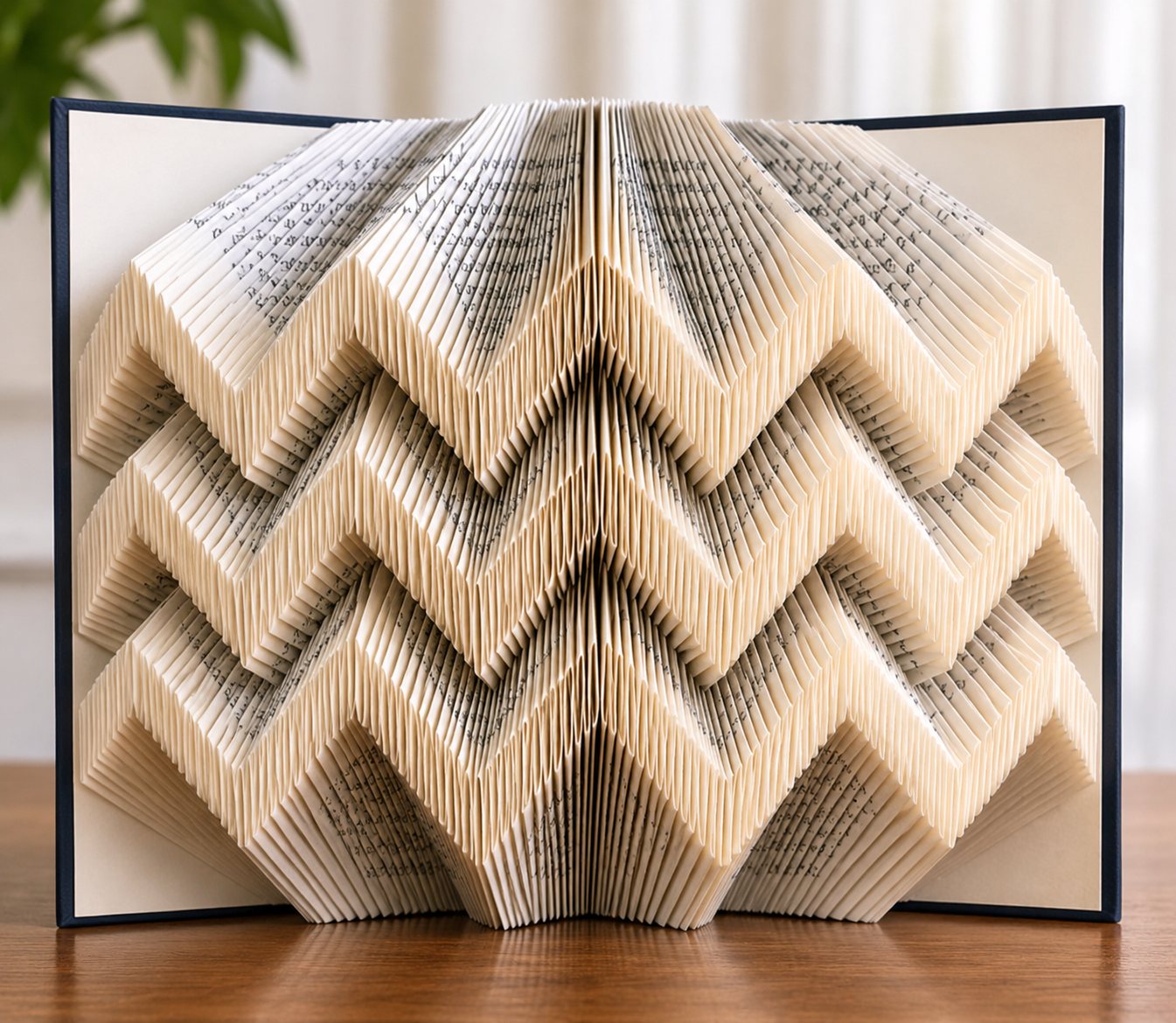
 Folded
The pattern
1. The figure becomes a silhouette
Everything starts with an image, but a book only understands two things: paper that stands out and paper that hides. So the first step is to reduce the figure to a two tone silhouette. Whatever ends up dark is what will show in relief. Inner details, like an animal's eyes or the hole inside a letter, come from gaps left inside that silhouette.
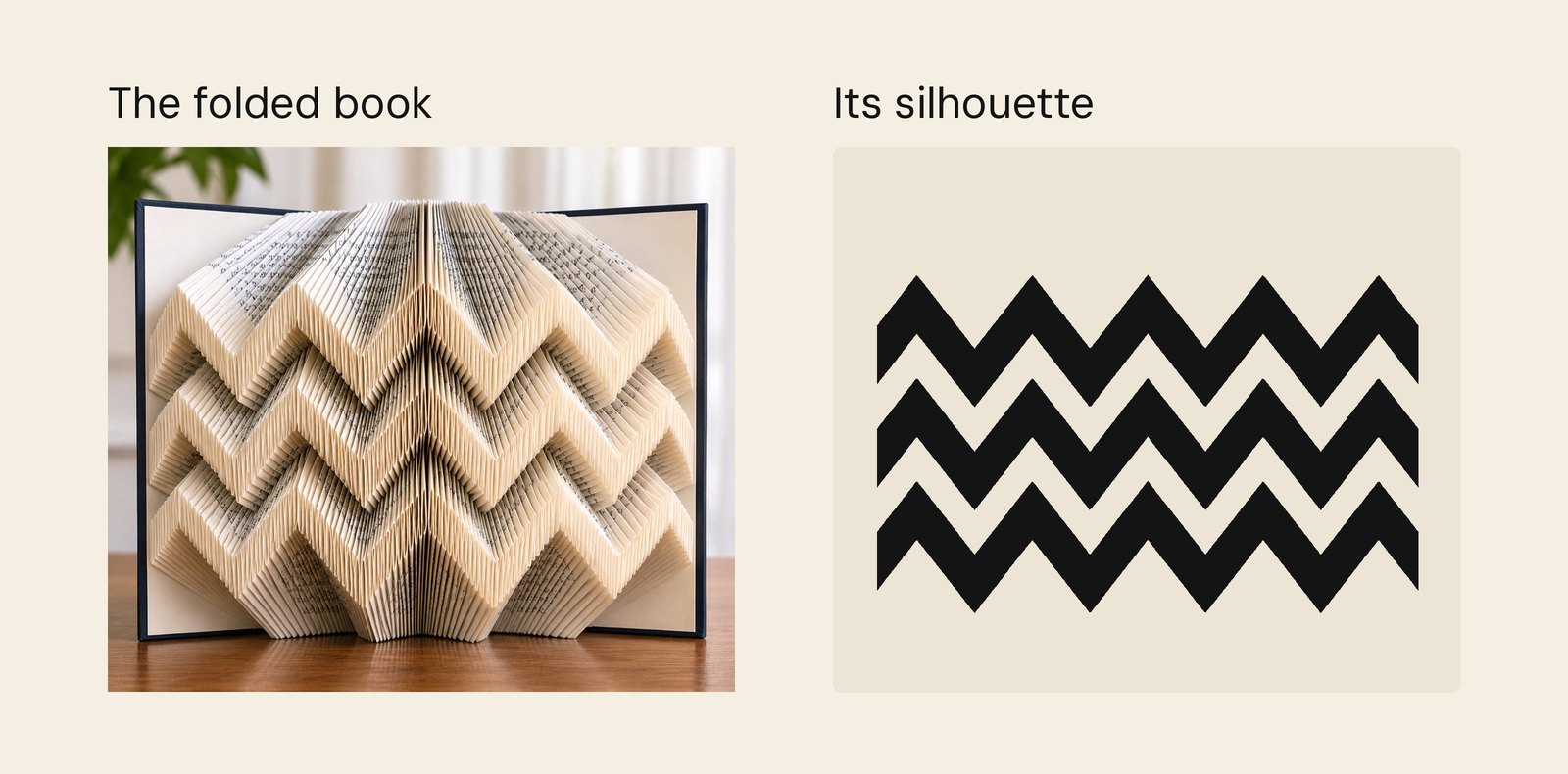
2. The silhouette is cut into vertical lines
Next, the silhouette is split into very thin vertical strips, side by side, as if you sliced it like a loaf of bread. This is the key idea of book folding: every line is one sheet of the book. The first line on the left is the first sheet you fold, and the last one on the right is the last.
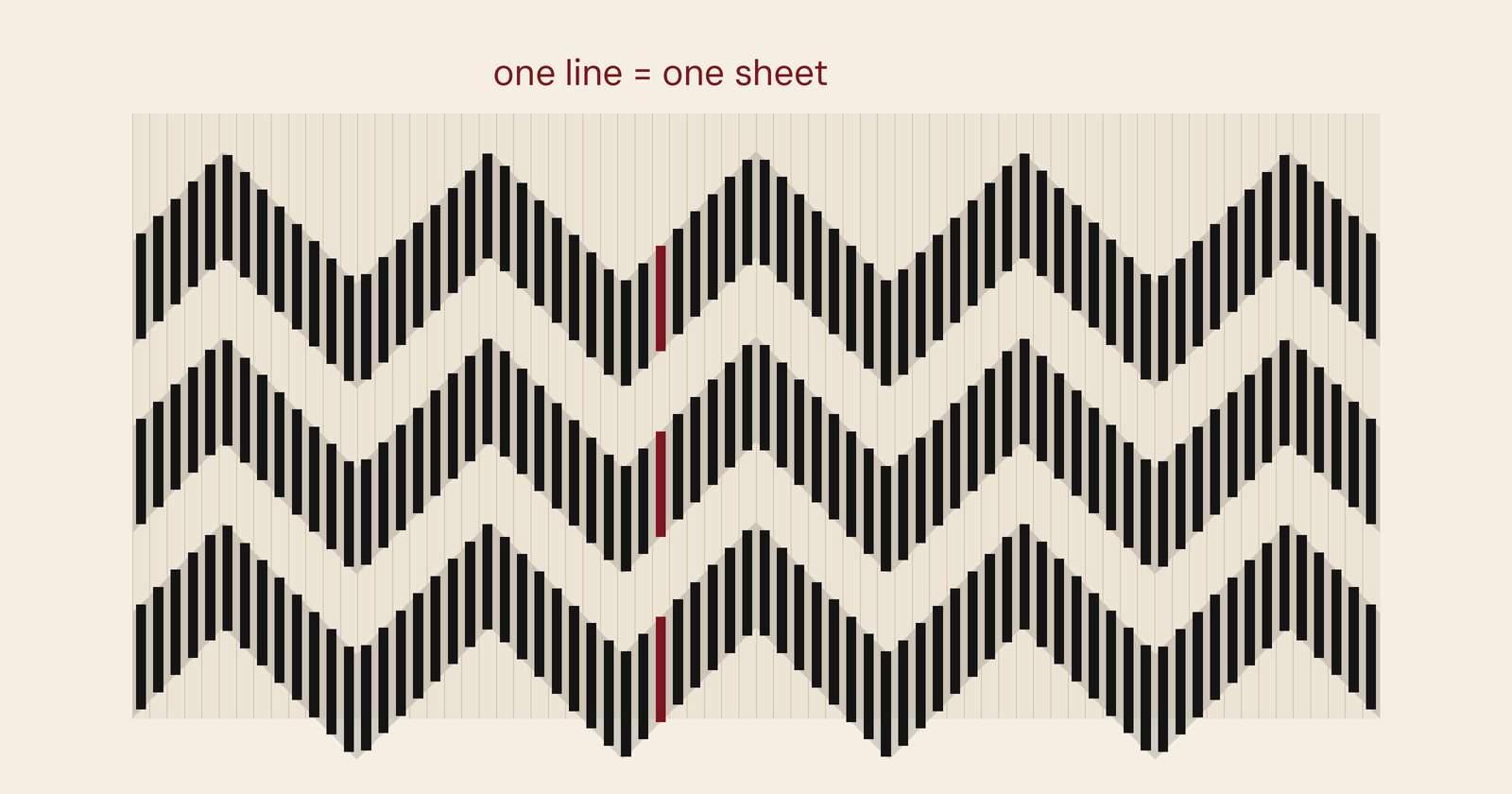
3. Every line is measured
Each line has a point where it starts and a point where it ends. Those two distances, measured from the top edge of the page, are the two folds of that sheet. At the top mark you fold the upper corner in, and at the bottom mark the lower corner. The part of the page between the two folds is what stands out, and when every sheet does the same, the figure appears.
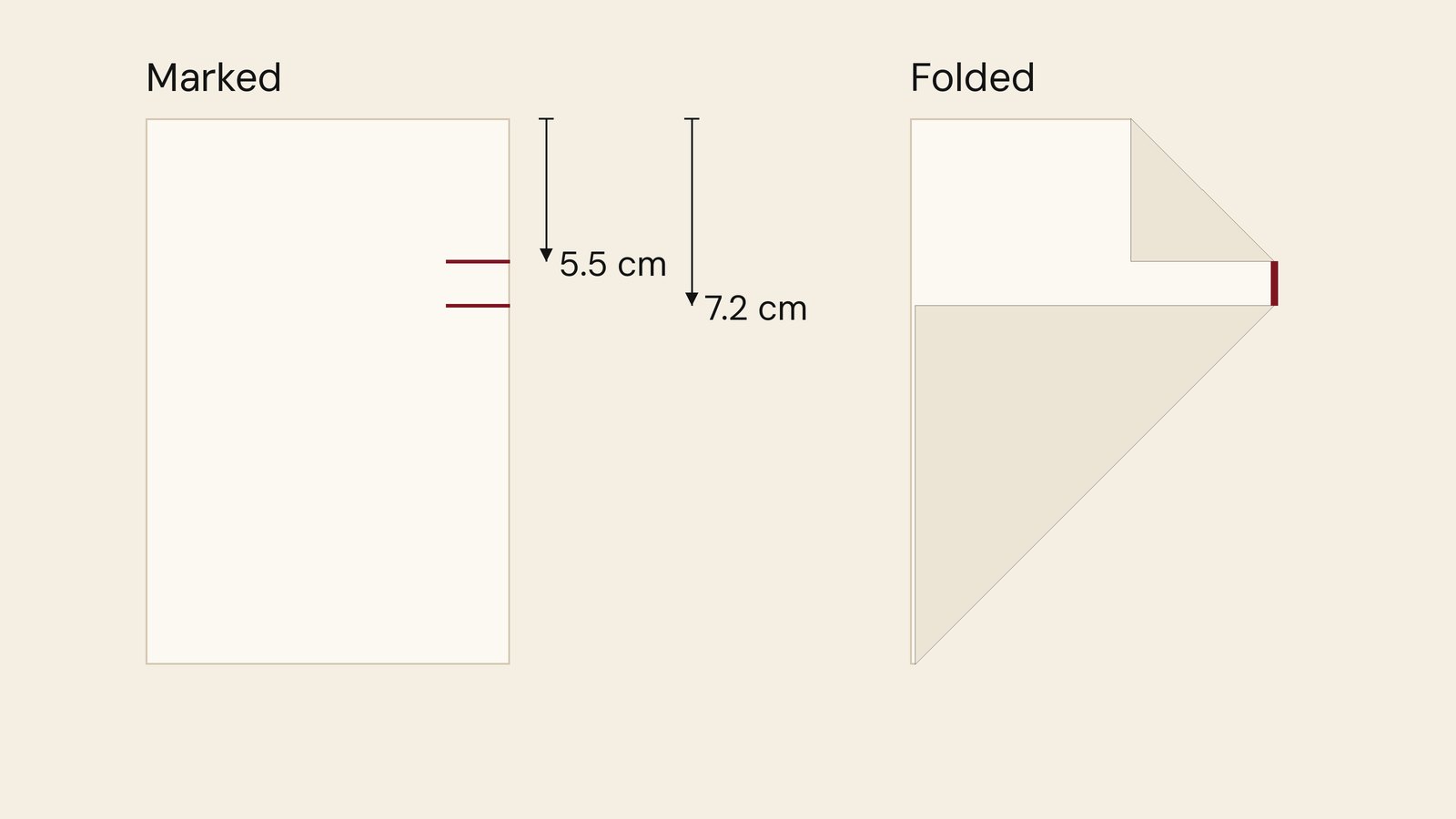
4. The book sets the limits
Your book decides two things:
- Height. In a book about 21 cm tall, the figure works well between 4 and 12 cm. Any bigger and it runs into the edges of the page; any smaller and it loses detail.
- Thickness. Each sheet adds about 1 mm to the width of the figure, anywhere from 0.5 to 1.5 mm depending on how firmly you fold. The Stained Glass Fox, for example, uses 97 sheets (194 pages) and ends up about 14 cm wide. A 500 page book has 250 sheets, and those are all the lines your figure can have.
That is why there is no such thing as a universal pattern. The same design needs different measurements depending on the book.
5. The design is adjusted to fit
When the figure needs more sheets than the book has, there are three ways out:
- Make it smaller. Lowering the height also narrows the figure, so it needs fewer sheets.
- Use a thicker book.
- Simplify the shape. Letters show this best. A name like Emma at 9 cm tall needs around 480 pages in a tall, condensed letter, and around 840 in a classic serif letter. Same word, almost twice the book.
6. When a line crosses the figure more than once
This is the step that confuses people most, and the slider above shows it well. In fold only book folding, each sheet gets one fold at the top and one at the bottom, so it can only form one piece of the figure. But some lines cross the figure two or three times, like in the chevron, which has three bands, or in a letter E, which has three arms.
The answer is interleaving: that line is shared out across several sheets in a row. In the chevron, the first sheet forms the top band, the next one the middle band, the next one the bottom band, and then it starts again. Look at the pattern in the slider and you will see every zigzag is made of separate lines, two spaces apart. From a normal distance the eye joins them, and in the folded book each band reads as continuous.
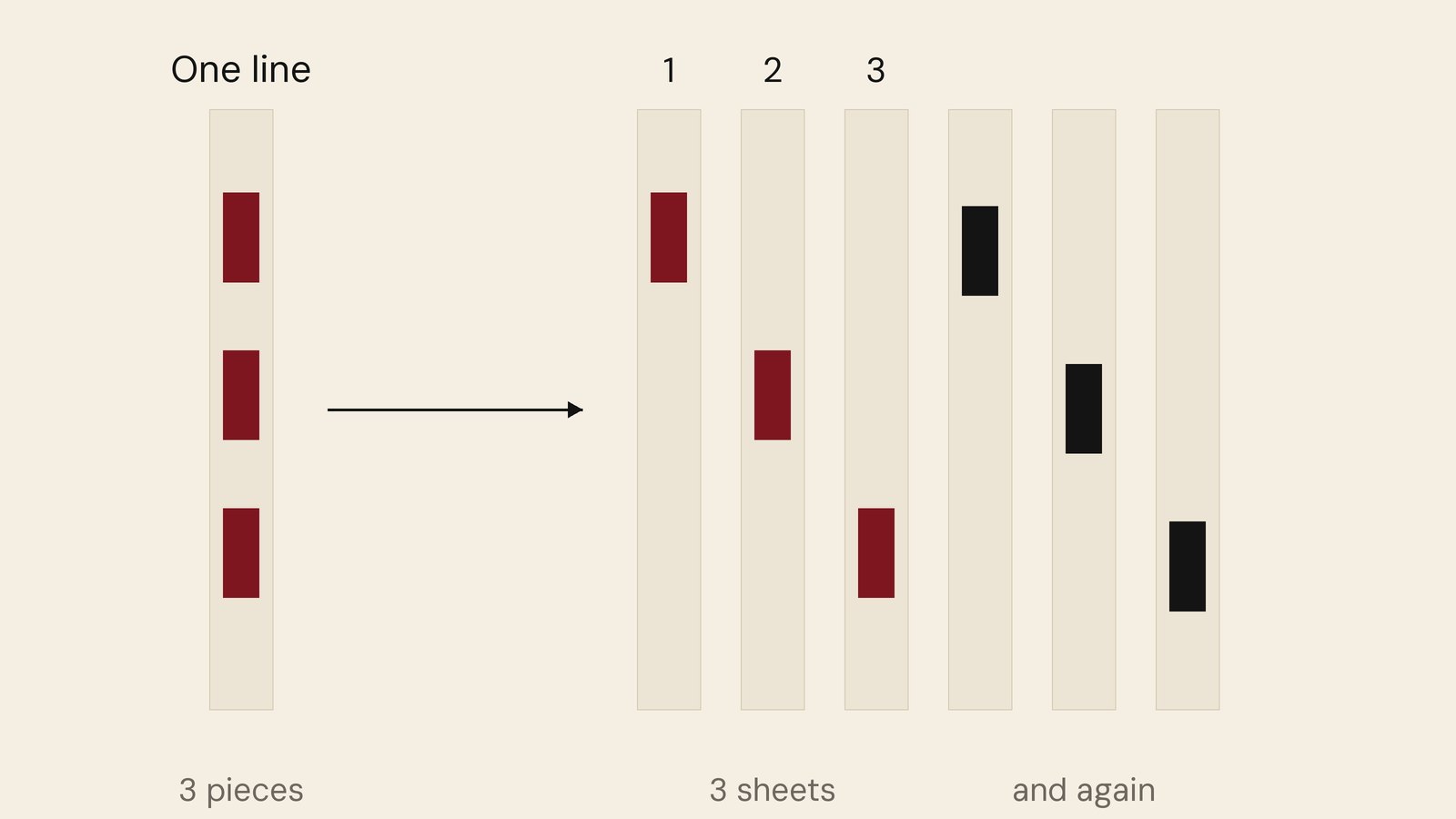
The cost is width. A line that crosses the figure three times uses three sheets instead of one, so the figure takes more of the book.
7. The empty spaces
Between two letters, or anywhere the figure is interrupted, there are sheets that should not show anything. There are two ways to handle them. The first is to treat them as a line with no length, a single point where both folds meet, which leaves a thin line of paper in the gap. The second is to fold that sheet in once more to hide the line completely, which also lets you play with how wide the empty space looks.
8. Placing the figure in the book
With every line measured and interleaved, you count the total number of sheets the figure needs and place it in the middle of the book, leaving the same number of unfolded sheets before and after. That way the book opens evenly and the figure faces you straight on.
What BookArt does for you
Everything above, the silhouette, the lines, the measurements, the fit to the book, the interleaving and the centering, is already worked out in every BookArt book, and the marks are printed on each page. You just fold where you see the mark.
And soon you will be able to do it with your own name: type the word, choose the letter style, and we will tell you if it fits your book before you start.
See your name folded into a book, and check how many pages it needs.