1. The umbrella: what an altered book is
An altered book is any book whose original function has been changed. It stops being something you read and becomes an object.
There is no single technique behind it. There is a whole family, and they all share the same work table.
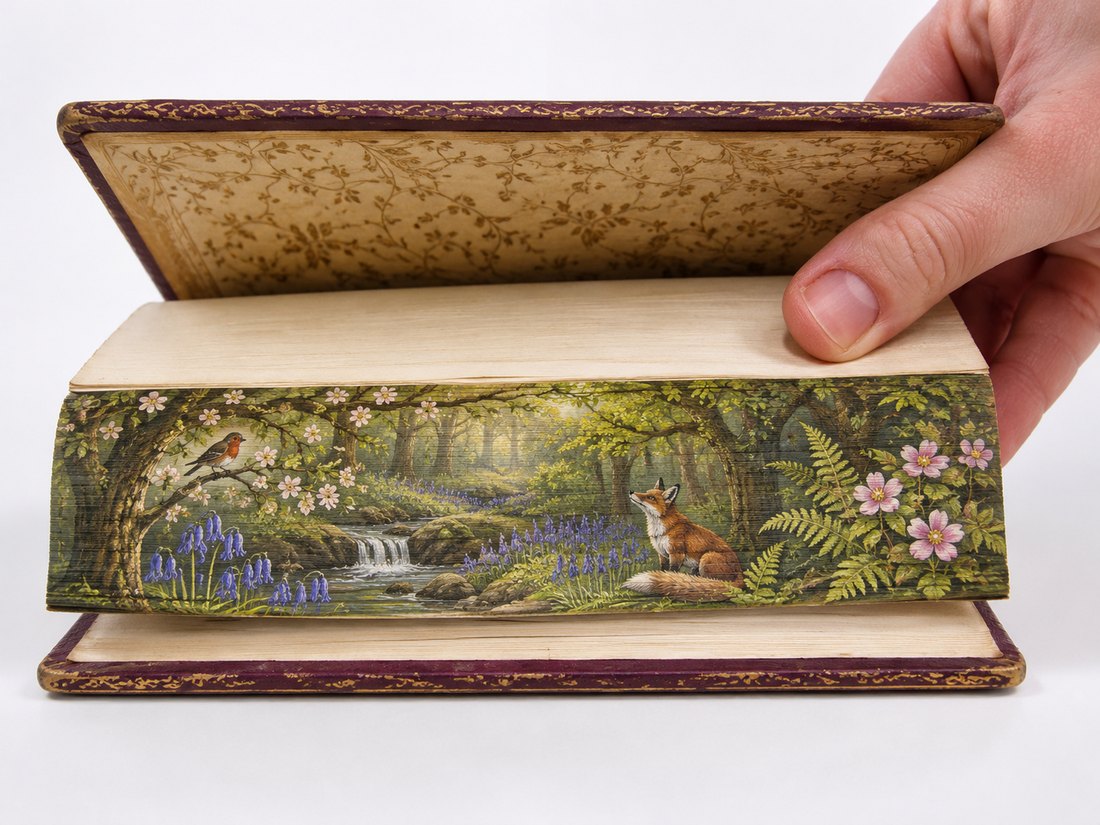
Painting the fore edge
The book is fanned open and the edge of the pages is painted. Closed, it looks like an ordinary book. Fanned at an angle, a complete image appears. It is one of the oldest forms of the craft and still one of the most surprising, because the image is invisible until the book is held the right way.
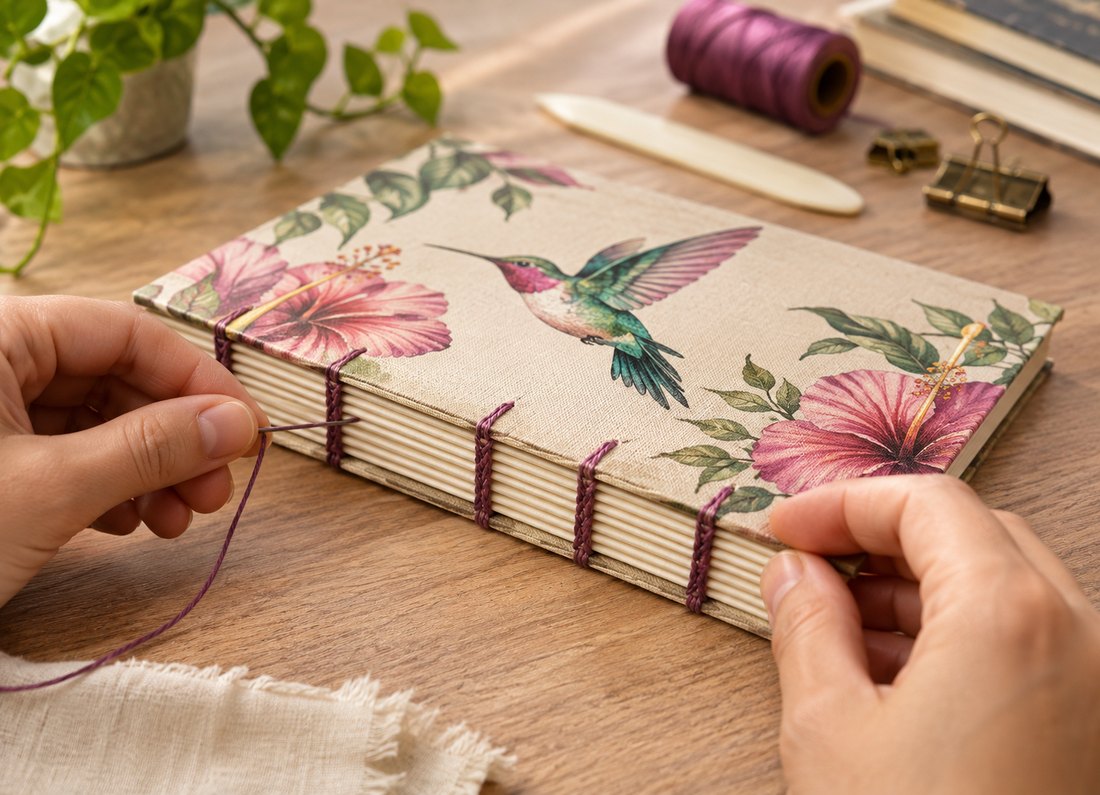
Working on the cover and the binding
Covering, painting, embossing or replacing the boards, or rebinding the whole block by hand with exposed stitching. This is where a generic book becomes a personal object before a single page is touched.
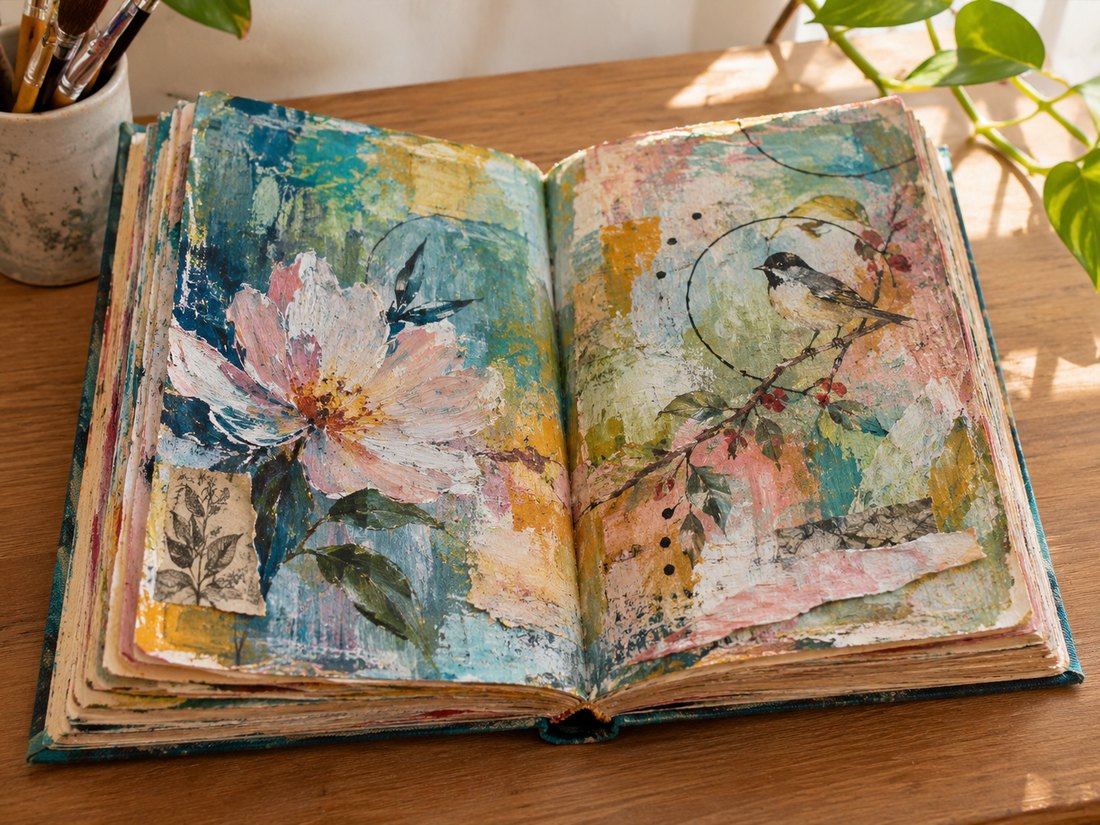
Painting and collaging over the pages
Art journaling. The pages become canvas, with layers of paint, cut paper, fabric and pressed botanicals. The original text stays underneath and shows through in places, which is part of the appeal.
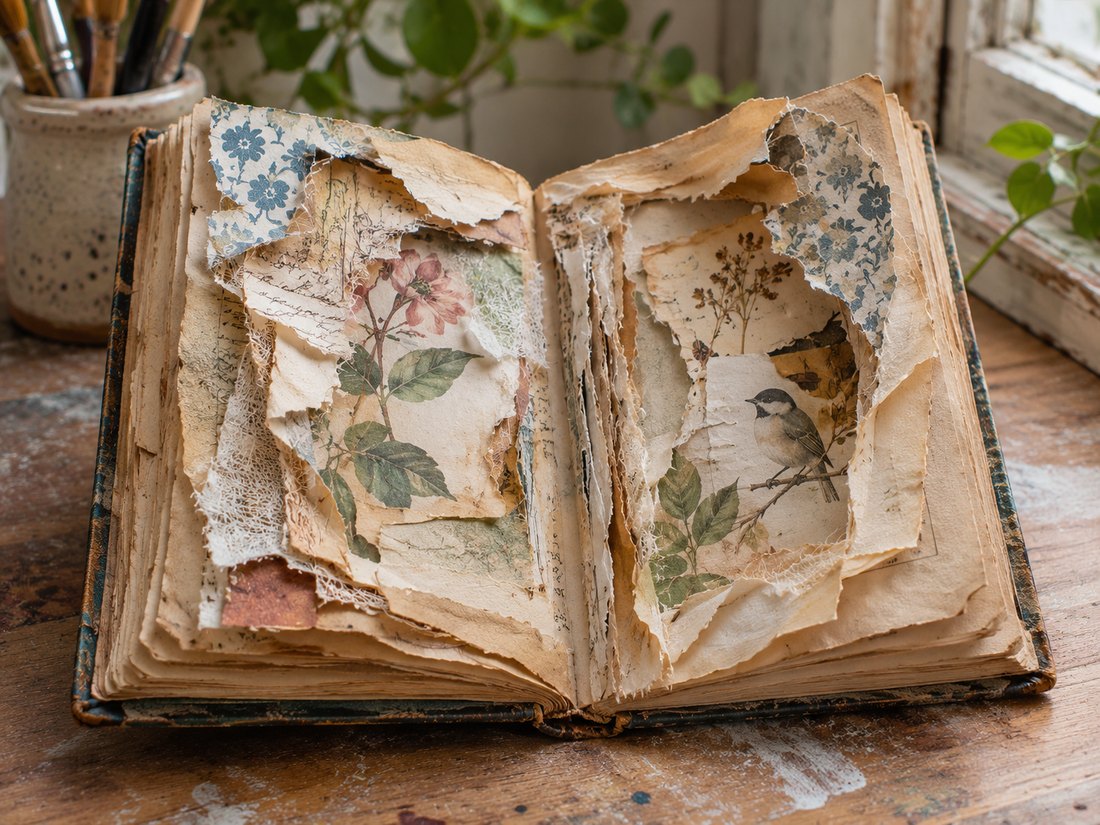
Cutting and tearing
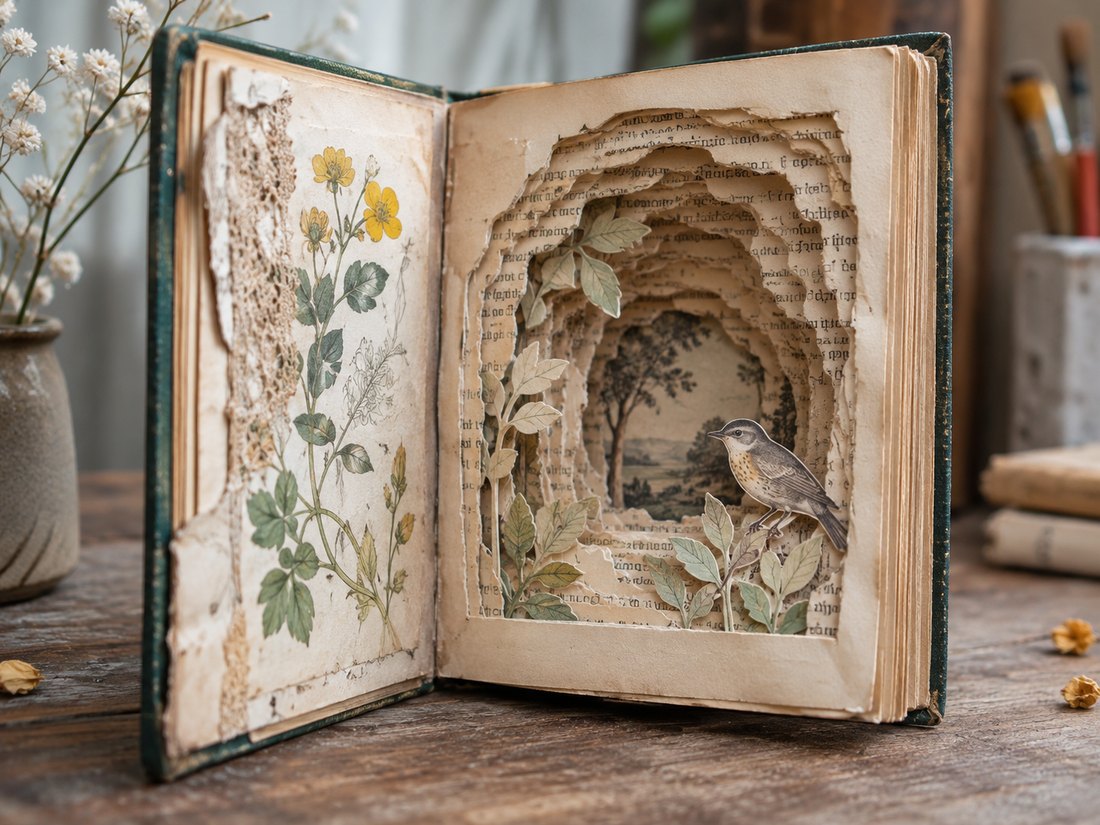
This branch runs from the junk journal, where pages are deliberately torn, layered and aged, to the tunnel book, where successive frames are cut out of the page block to create depth and a scene you look into rather than at.
Folding
And here is the branch this whole site is about.
2. Book folding: five different techniques
Folding a book is not one thing. There are at least five routes, and the result changes completely depending on which one you take.
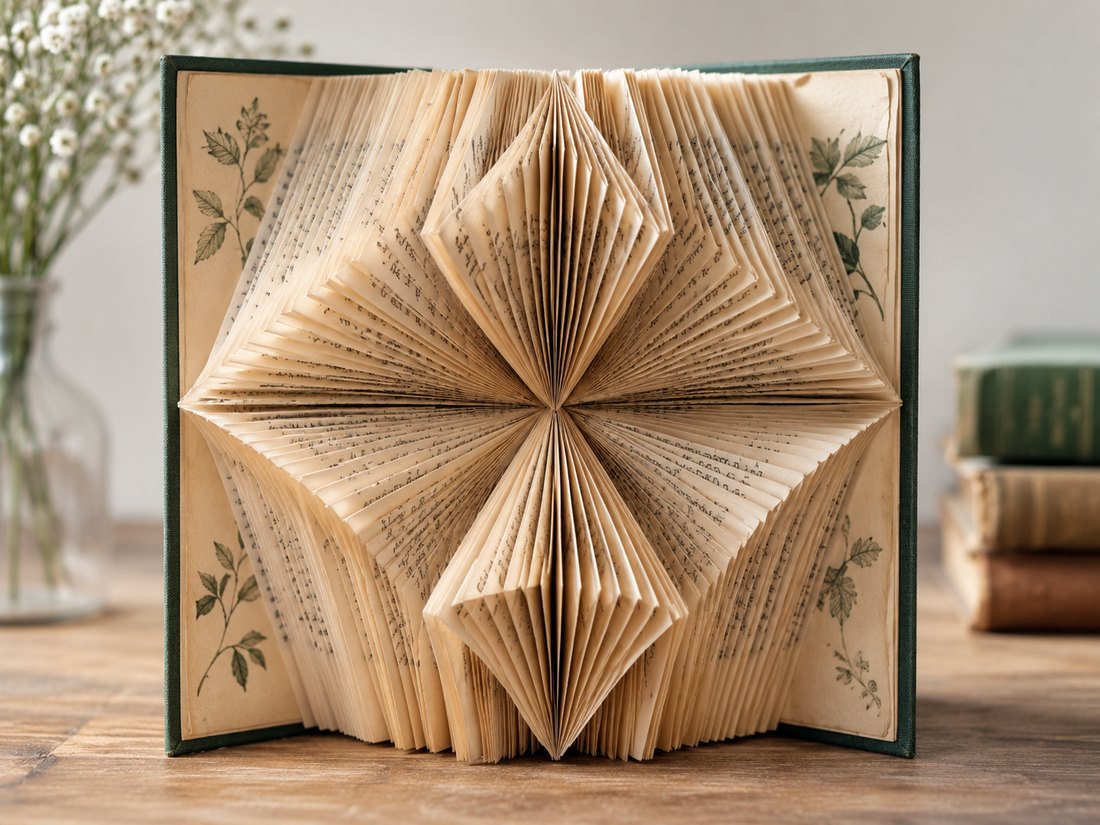
Fold only
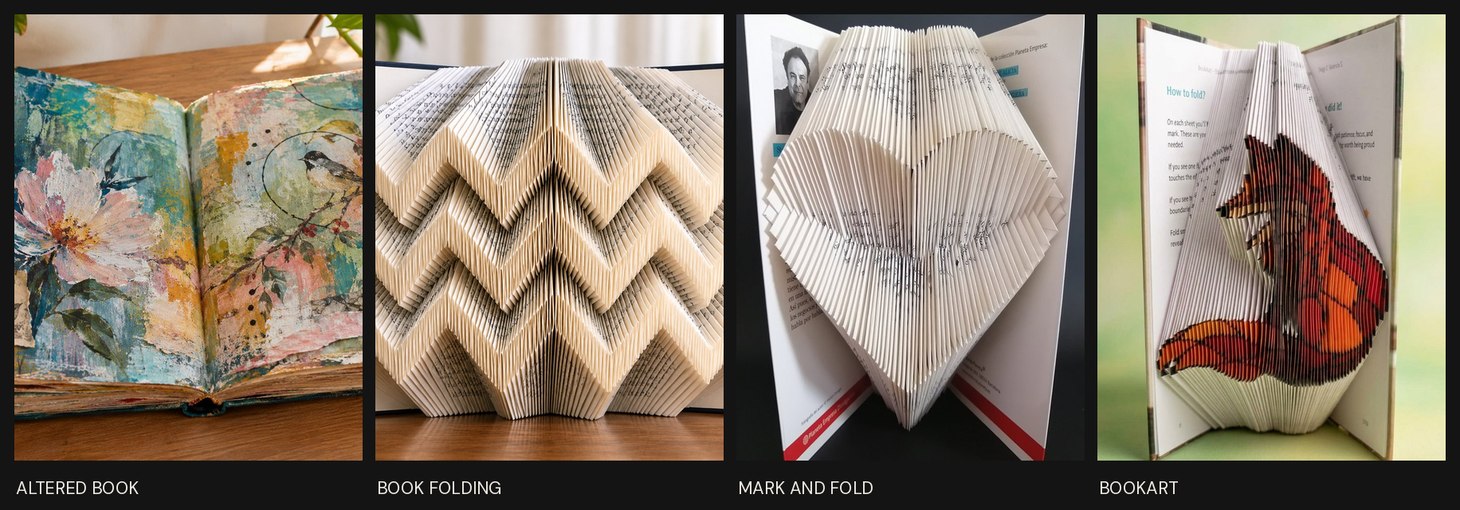
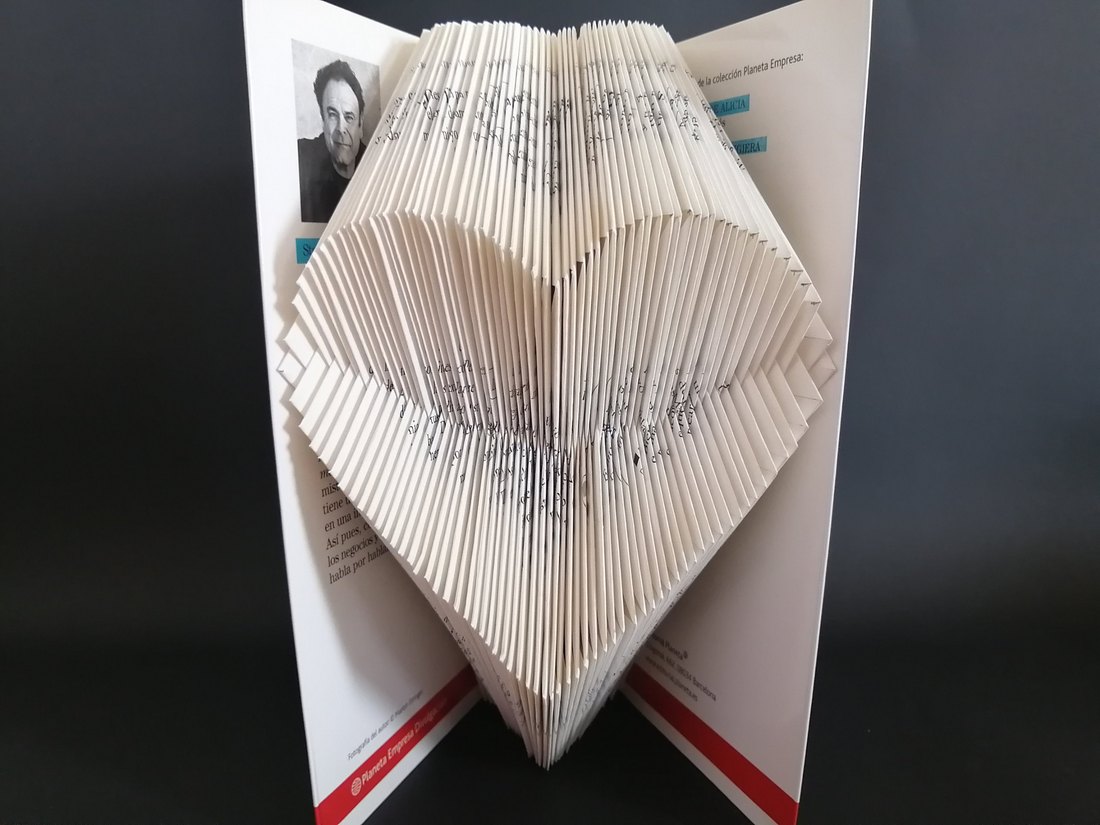
No marks, no cuts. You fold following a sequence and geometric or abstract patterns appear: zigzags, diamonds, waves. The result does not represent anything. It is pure form and texture, and the paper itself is the subject.
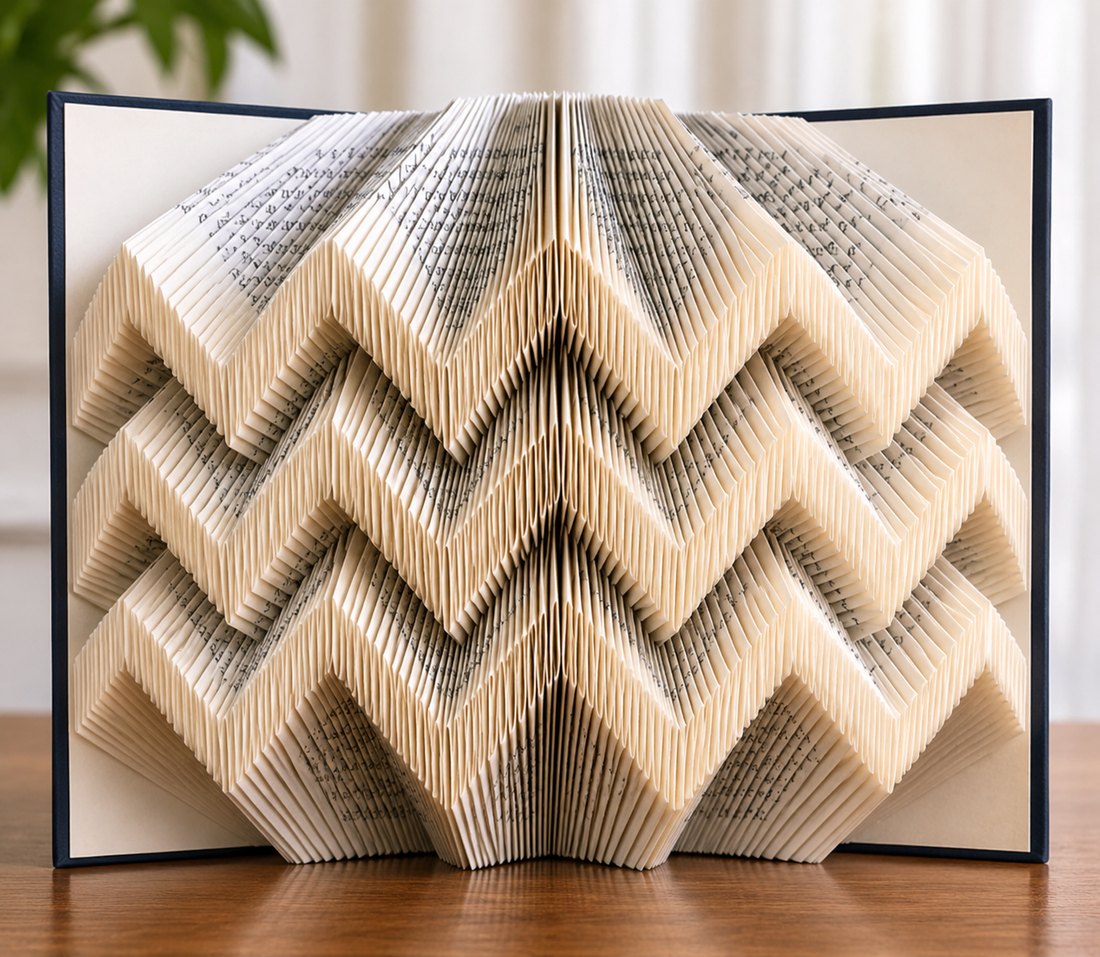
It is the most common way in, because nothing has to be calculated in advance. You learn the logic of the fold with your hands before you worry about making a figure.
Mark and fold
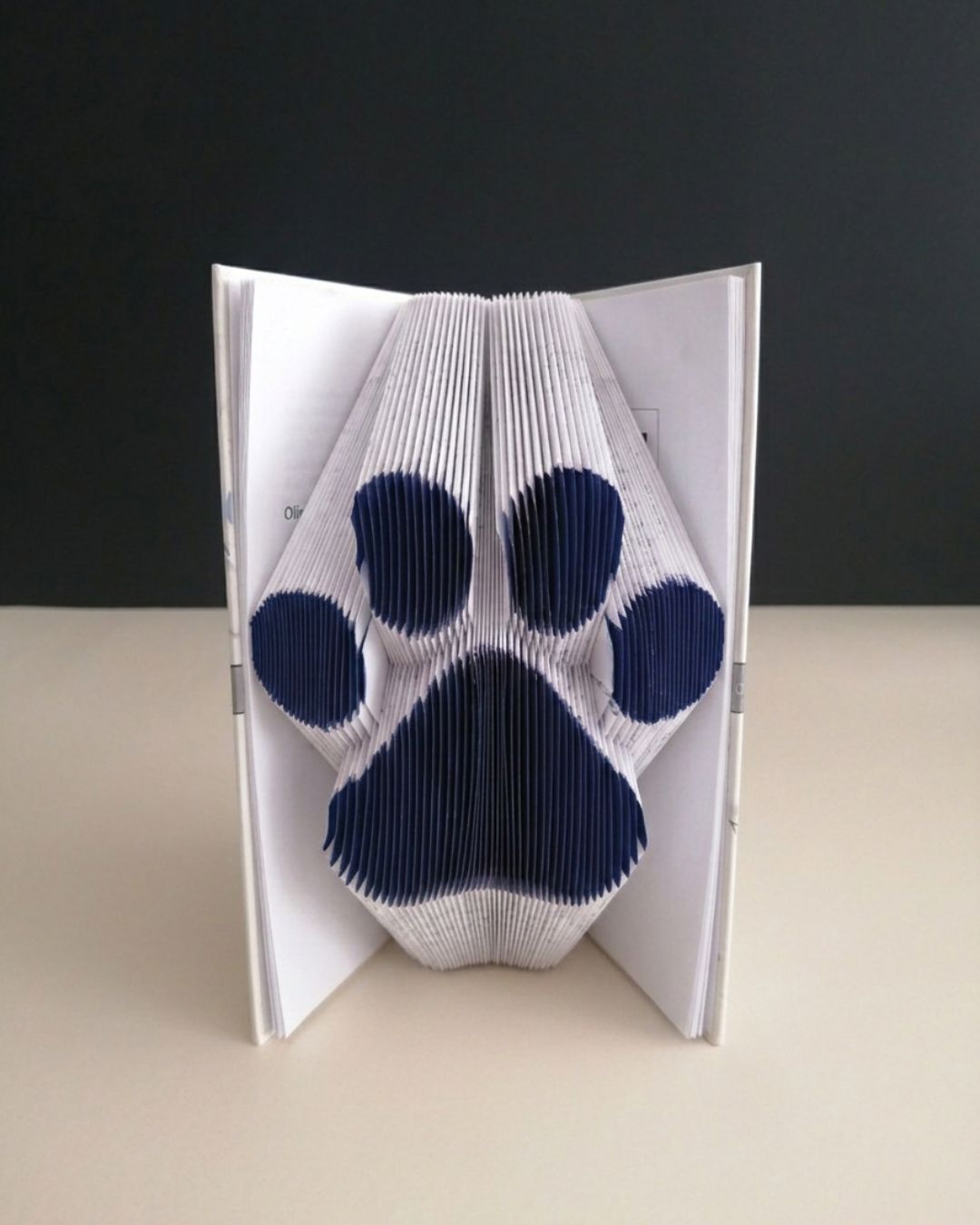
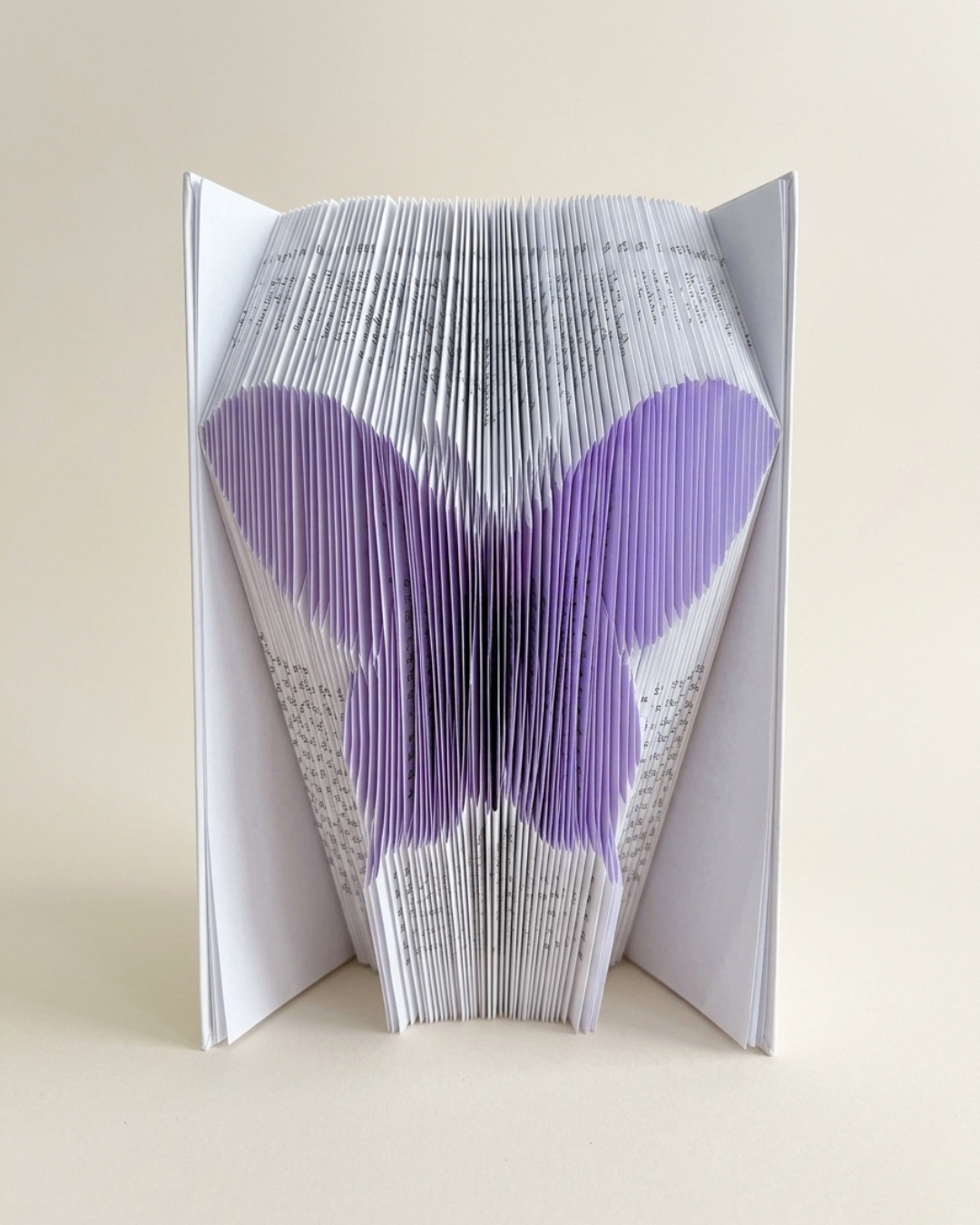
Each page carries one or more marks that say where to fold. As the folds accumulate, those marks build a recognizable figure. This is the point where book folding stops being decorative and becomes representational.
Cut and fold
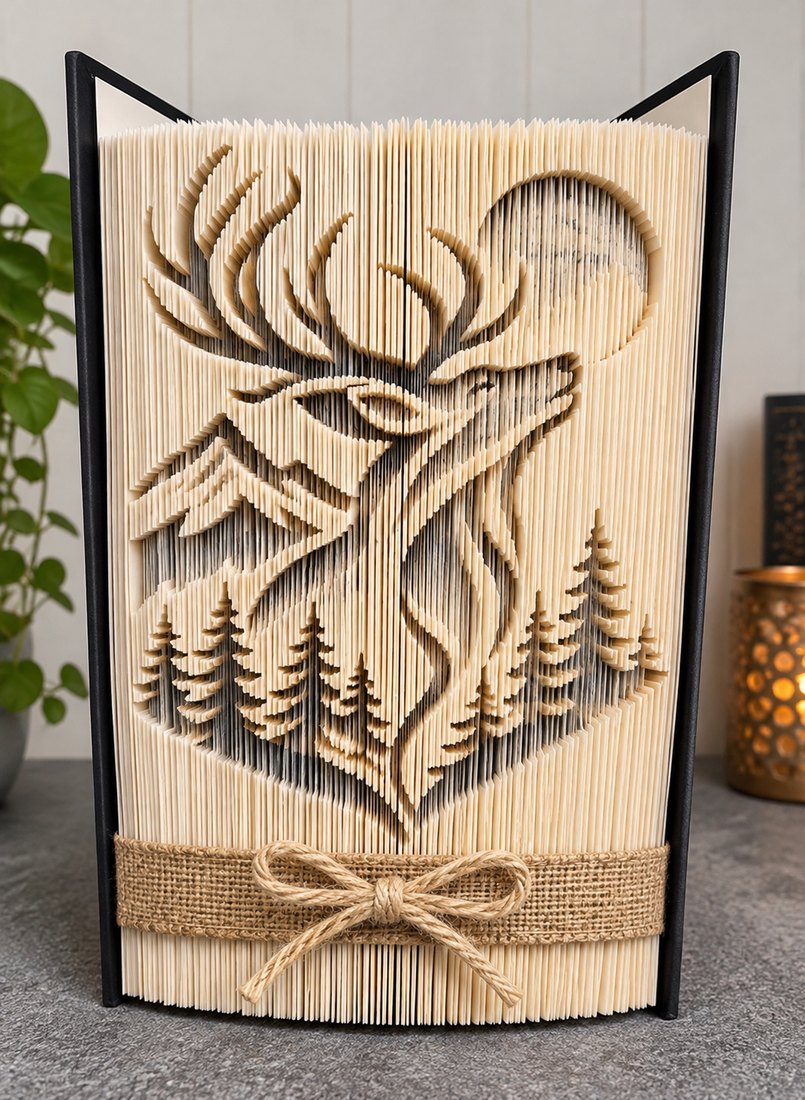
Part of the page is cut before or after folding. This reaches a level of detail that folding alone cannot: the antlers of a stag, the branches of a tree, outlines with complex contours. It is the most demanding technique in time and in steadiness of hand, because a cut cannot be undone.
Combining folds and cuts
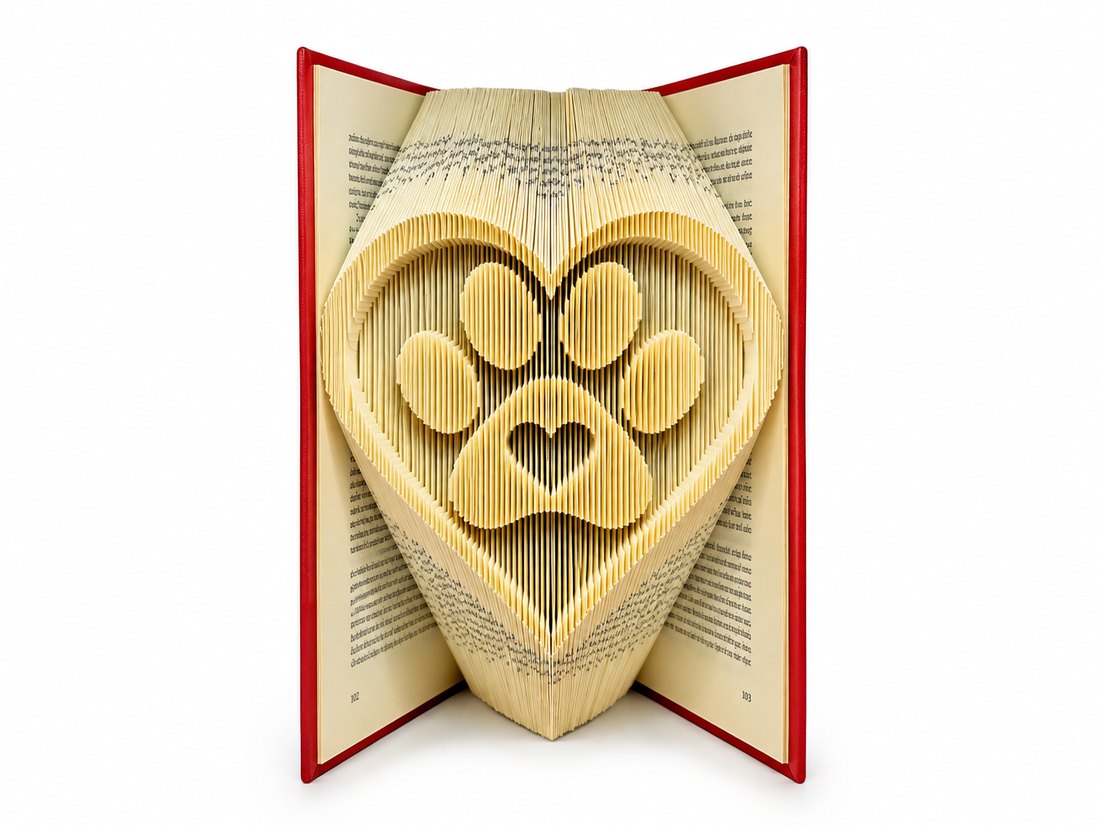
The corners are folded and the centre is cut, or the other way around. The result has two textures at once, with smooth areas and pleated areas, and it reads differently depending on the angle you look from.
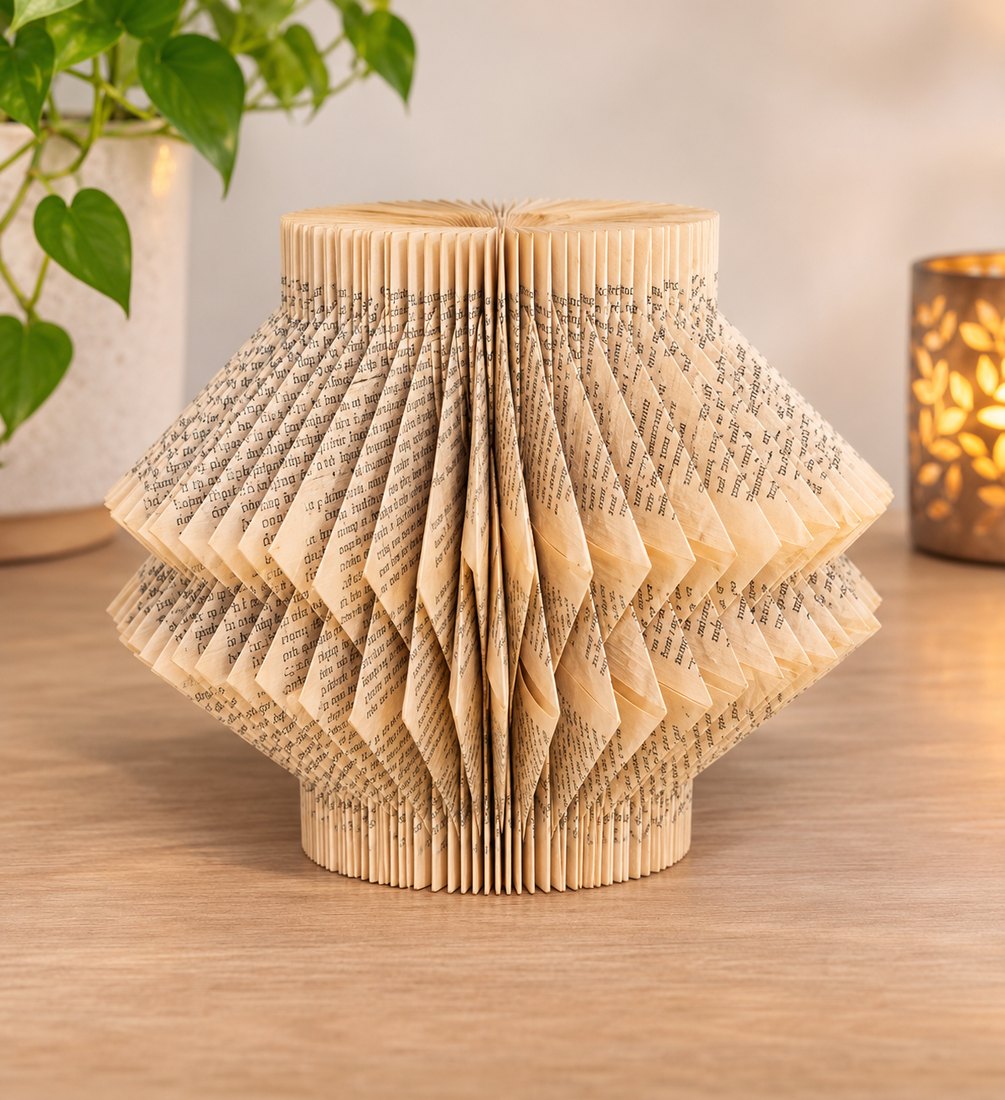
Folding in 360
The whole book is folded and then the covers are joined together, forming a circular piece that stands on its own. Lamps, centrepieces, sculptures that work from every side rather than from the front.
3. Mark and fold: the three possible results
This is the technique BookArt uses, so it is worth opening up.
Depending on how the marks are calculated, the figure can appear in three different ways.
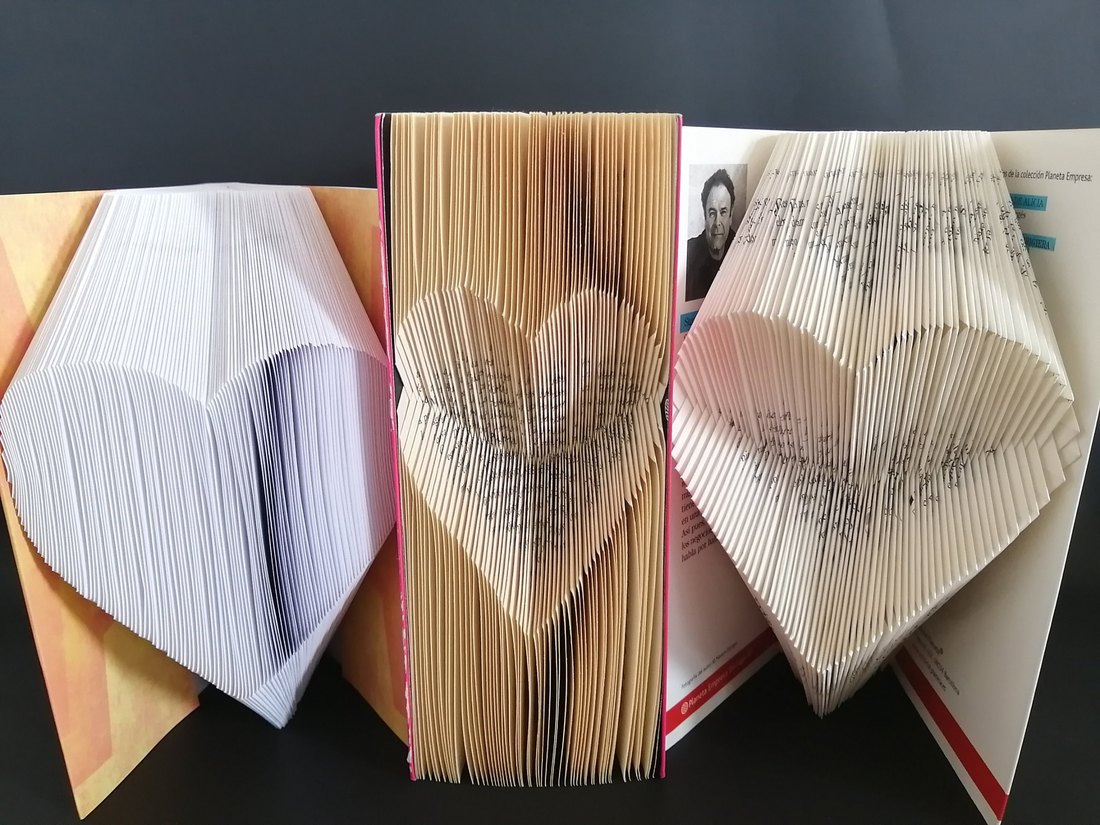
High relief
The figure comes forward. The block of folded paper advances and the shape projects against the background. It is the one with the most volume and the one that plays best with side light, because every fold casts its own shadow.
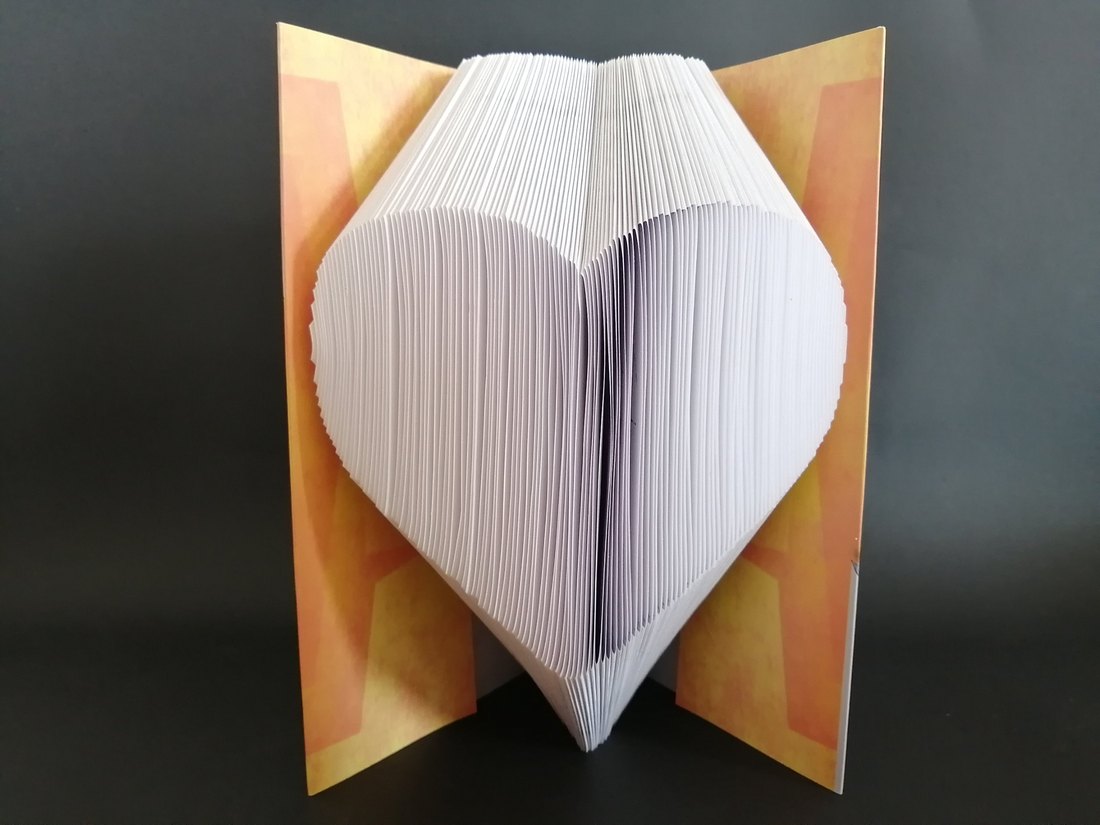
Low relief
The figure sinks in. The background advances and the shape is carved inward. The effect is more subtle, built from shadow rather than volume, and it works very well on figures with clean outlines.
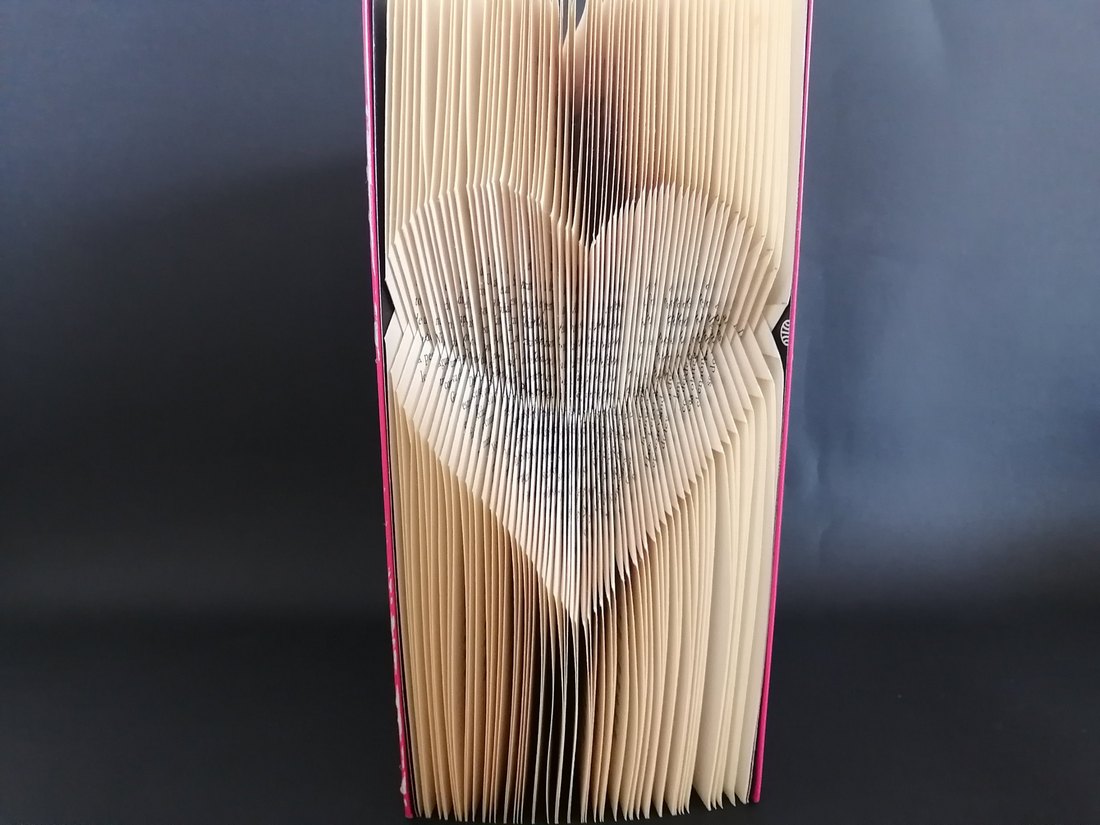
Combined
Parts of the figure come forward and others sink in. This is the one that achieves the most depth, because two planes are working at the same time, and it is the one that holds up best on complex figures.
Every BookArt design in one place, filtered by type and by occasion.
Browse the collection4. And it can be painted
Nothing stops you from painting a figure once it is folded. On white paper, acrylic or watercolour goes straight onto the edge of the folds, and the colour follows the relief instead of sitting flat.
This closes the circle with the altered book we started from. A piece can be folded and painted, folded and rebound, folded and mounted on another base. The techniques do not compete with each other. They stack.
5. Where BookArt fits
BookArt is mark and fold, with one difference: the marks are already printed in the book.
In traditional book folding, that is the step that stops everyone. You have to find a pattern, interpret it, find a book with exactly the right number of pages, measure every sheet with a ruler and mark it in pencil. That is hours of work before the first fold, and one miscalculation ruins the whole piece.
We removed that step. You buy the book, you open it and you fold. No ruler, no pencil, no pattern to download, no counting pages. The book is the pattern.
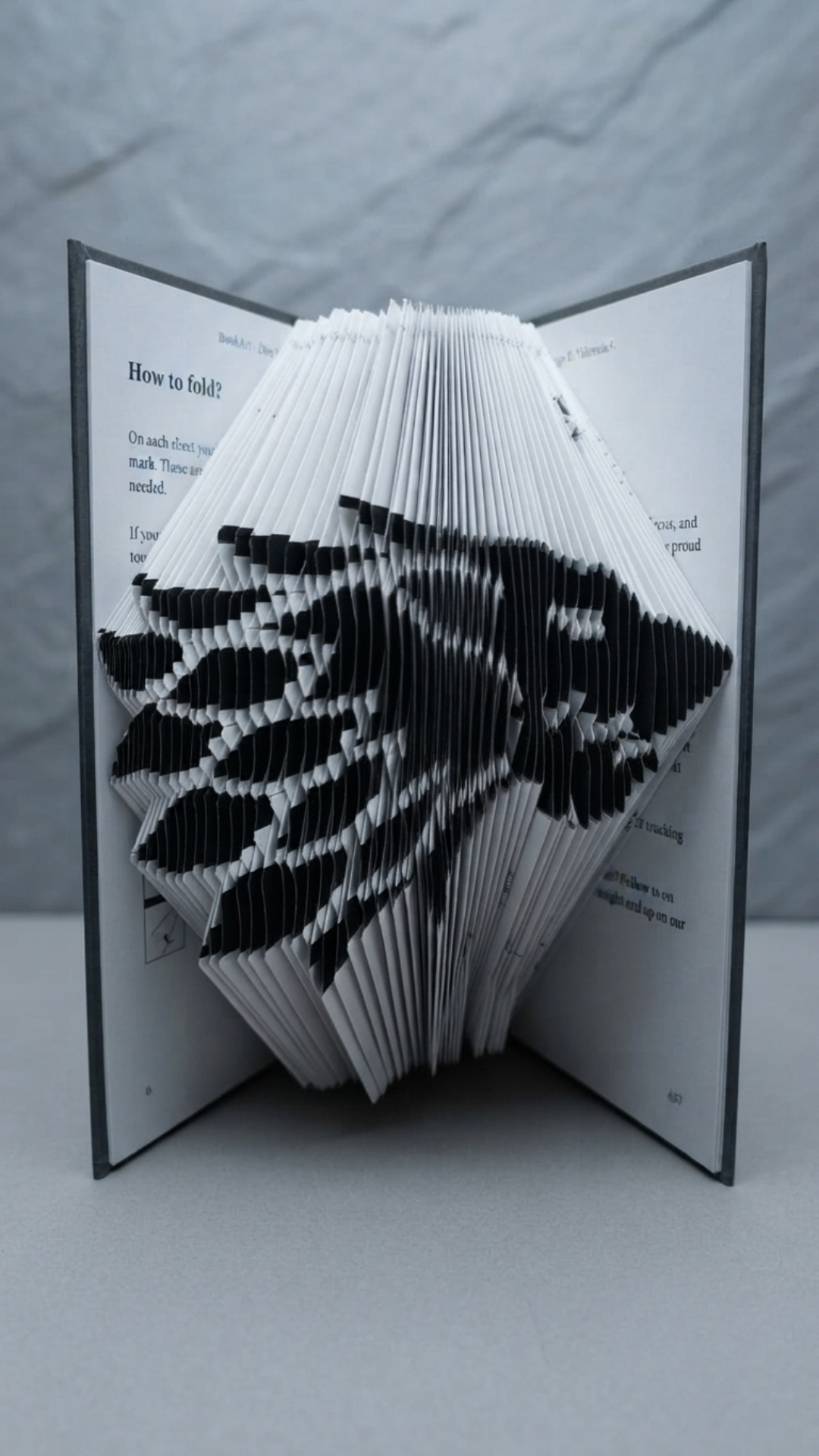
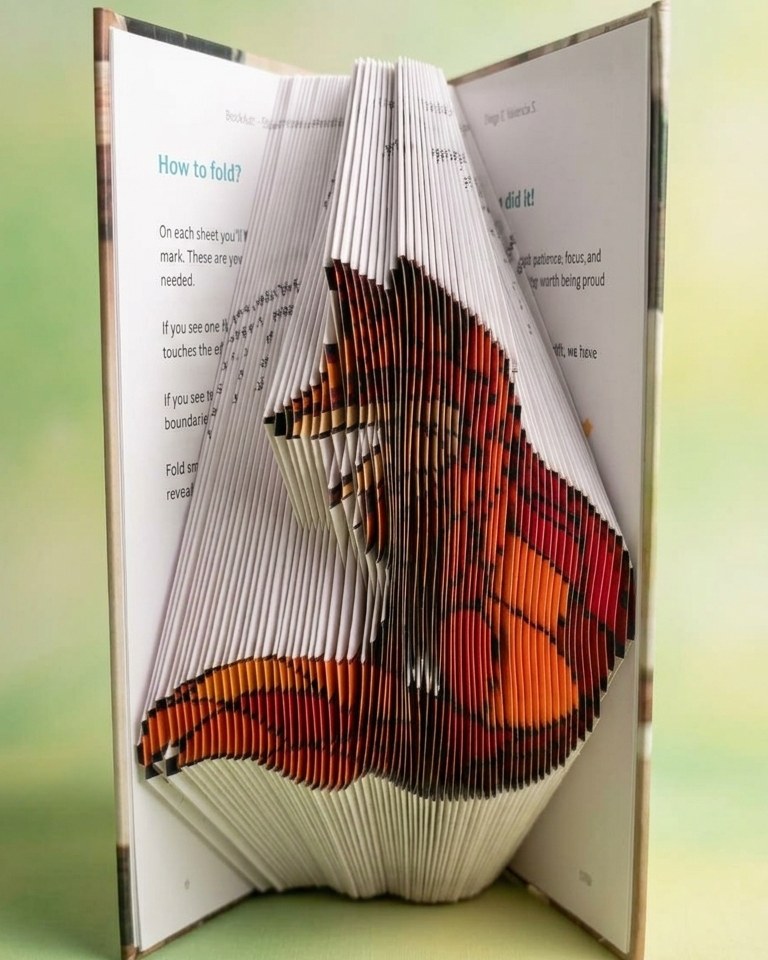
And we added something that does not exist anywhere else: printed colour. Each page carries the portion of colour that belongs to it, so when you fold, it is not only a shape that appears. A complete image appears, with gradients and shadows built into the paper.
So where does that leave you?
If you got here searching for altered books, book folding patterns or paper sculpture, now you know all of it is the same family seen from different distances. Altered book is the whole house. Book folding is one room. Mark and fold is one corner of that room.
And if what you want is the result without the hours of calculation, that is exactly the problem BookArt solves.
Frequently asked questions
Every design comes pre marked and ready to fold, with no experience, no tools and nothing to calculate.
Shop all designs on Amazon